

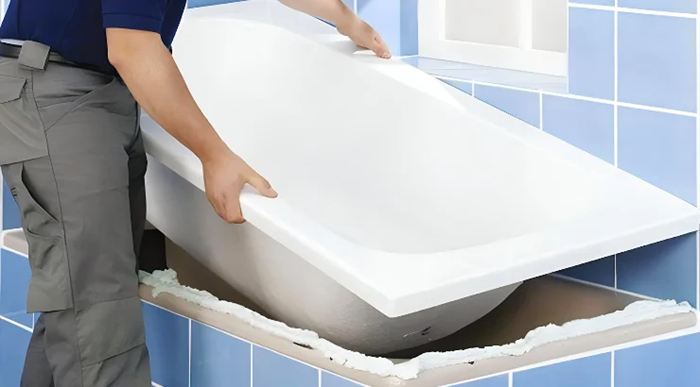
Replacing a bathtub is one of the most noticeable stages of a bathroom renovation: it changes not only the appearance, but also ease of use, hygiene, safety, and even water consumption.
To ensure a long-lasting result, it’s important to assess the condition of the plumbing, the room’s parameters, and the compatibility of the new model with the old wiring diagram in advance.
In practice, replacing a bathtub is often part of a comprehensive renovation, especially when remodeling, relocating plumbing fixtures, or updating the finishes is planned. Internationally, such work is often described as bathroom remodeling in charlotte, nc, but the key rules are the same everywhere: precise measurements, proper waterproofing, and proper installation.
Preparation: What to Check Before Purchase and Dismantling
The main mistake is choosing a bathtub “by eye” and figuring out the plumbing after delivery. It’s much more reliable to first gather the initial data: dimensions, access to risers, sewer outlet height, and wall/floor condition.
Measurements and room geometry
- Niche length and width: measure at several points, taking into account possible wall curvature.
- Side height: important for easy entry and for joining with tiles/panels.
- Doorway position: check whether the bathtub will fit when carried in, and whether it will be necessary to temporarily remove the frame/panel.
- Consider finishing: the thickness of the tiles and adhesive can “eat up” several millimeters and affect the fit of the bathtub in the niche.
Utilities: water, sewerage, Electrical
Before replacing the bathtub, consider whether the faucet will need to be moved, the height of the trap changed, or an inspection hatch will need to be installed. Pay particular attention to the drain slope: if the trap is too high, water will drain poorly, and if it’s improperly assembled, odors will develop.
- Drainage: Check the diameter, condition of the sockets, presence of cracks, and the quality of the connections.
- Water supply: Inspect the faucets, filters, and flexible hoses; If in doubt, replace it immediately.
- Electrical: If you plan on using hydromassage or lighting, prepare a protected line and RCD in advance.
Summary: When is replacing a bathtub really justified?
Replacing a bathtub becomes a rational decision when defects in the bowl, enamel, or connection points cease to be cosmetic and begin to affect the safety, hygiene, and reliability of the plumbing. If the problem recurs after repairs or quickly returns, this is a sign of system wear.
Don’t just look at appearance: hidden leaks, unstable installation, material deterioration, and the inability to properly restore the coating are all critical. In such cases, it is better to replace the entire bathtub than to constantly fix the consequences.
Key signs that it is time to replace the bathtub
- Recurring leaks in the area of the trap, overflow, drain pipe, or at the joints with tiles, especially if the problem returns after replacing the gaskets.
- Cracks, chips, holes in the bowl (acrylic/steel/cast iron), as well as a “spiderweb” of cracks around the drain or along the bottom.
- Severe wear of the enamel: deep roughness, porosity, multiple chips, areas of rust that quickly reappear.
- Persistent dirt and odor that cannot be removed by cleaning due to the damaged coating and micropores.
- Deformation and instability: the bathtub “plays,” sags, creaks, is out of alignment, pulls away from the wall, and new cracks appear.
- Signs of moisture around: damp walls/floors, mold, blistering finishes, darkened seams are indirect signs of a hidden leak.
- Inability to perform high-quality restoration: local repairs don’t hold up, and restoration will cost almost as much as a new bathtub without a guarantee of durability.
- Compatibility issues during bathroom renovation: the old bathtub is the wrong size/height, making it difficult to install the tub, install a screen, or seal joints.